

Ad blockers can hide more than adverts: they may also stop analytics scripts from recording visits and conversions. The ad blocker impact on marketing analytics can leave gaps in campaign data, making attribution less reliable and advertising performance harder to assess.
That doesn’t mean every blocked script represents a lost customer or that server-side tracking closes every gap. Ad blockers check pages for scripts and elements that match their filter lists, so the impact depends on what is blocked and how tracking is configured. Privacy choices still matter: server-side tracking should respect consent signals and avoid sending data that hasn’t been permitted.
This article explains why people use ad blockers and how filtering can affect analytics, attribution and advertising spend. You’ll learn what server-side tracking can and can’t do, and how to interpret incomplete data more clearly. The goal is a more dependable view of performance, without mistaking missing signals for the entire customer journey.
Key Takeaways
- Ad blockers can prevent analytics scripts from recording visits and conversions, leaving gaps in campaign reporting.
- Server-side tracking can capture selected events through your own domain, but it must respect consent and cannot restore every missing signal.
- Compare attribution models with broader evidence, such as customer feedback and sales insights, to avoid treating incomplete data as the full journey.
- Review ad formats and industry standards, then assess allowlisting as one possible way to improve ad delivery.
- Performance marketing analytics and automated reporting can help bring fragmented signals into a clearer view for better-informed decisions.
Can ad blockers block Server-side Tracking?
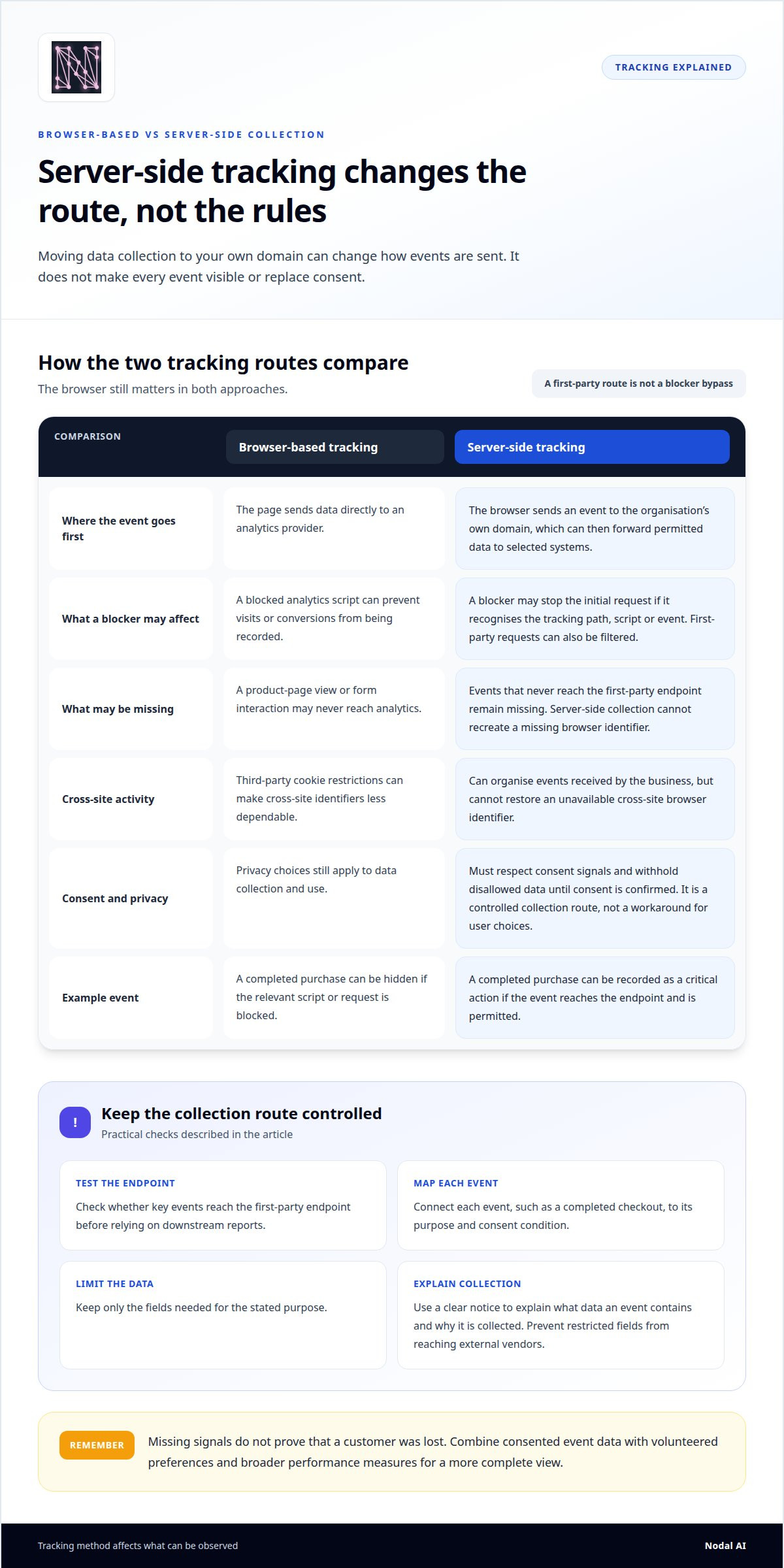
Yes, ad blockers can affect server-side tracking, but moving data collection to a server doesn’t make every event visible. In browser-based tracking, a page sends data directly to an analytics provider. With server-side collection, the browser first sends an event to the organisation’s own domain, which can then forward permitted data to selected systems. For example, a completed purchase can be recorded as a critical action. The ad blocker impact on marketing analytics depends partly on whether that initial request reaches the domain.
This first-party route changes where data is collected, not what a browser allows. A blocker may stop the initial request if its filter recognises the tracking path, script or event. First-party tracking requests can also be filtered, especially when their names or behaviour match known patterns. Test whether key events reach the first-party endpoint before relying on downstream reports.
First-party data comes from a direct interaction with a business, such as a site visit or purchase. Zero-party data is information someone deliberately shares, such as a preferred product category selected in a form. A preference centre can collect this audience input directly. These signals add context, but they don’t replace an unrecorded visit or prove which campaign caused a sale.
Third-party cookie restrictions also affect how marketers connect activity across sites. A cookie set by another domain may be limited or unavailable, making cross-site identifiers less dependable. Server-side collection can organise events received by a business, but it cannot recreate a missing browser identifier. To assess the ad blocker impact on marketing analytics, combine consented event data with volunteered preferences and broader performance measures.
The risks of server-side tracking and fingerprinting differ. Server-side tracking can send data users did not permit if consent signals are ignored, so configure it to withhold disallowed data until consent is confirmed. Fingerprinting combines device or browser characteristics to identify people, which can undermine privacy expectations and invite further blocking.
Use a clear notice to explain what data an event contains and why it is collected. Then map each event, such as a completed checkout, to its purpose and consent condition. Keep only the fields needed for that purpose, and prevent restricted fields from reaching external vendors. This makes server-side tracking a controlled collection route, not a workaround for user choices.
How Ad Blockers Work and Impact Your Marketing Strategy
Ad blockers can hide interactions from analytics, changing how teams assess campaigns and content. The ad blocker impact on marketing analytics can make it harder to distinguish weak performance from missing signals.
Ad Blockers and Marketing Data
Ad blockers are browser tools that filter adverts and related requests, which can leave gaps in marketing data. If a visitor blocks a tracking script, a product-page view or form interaction may never reach analytics. The resulting record can show fewer visits or conversions than actually occurred.
That gap matters when teams compare campaign results or decide where to invest. For example, a paid search visit may lead to a later purchase, but a blocked event can hide the connection. Set up reporting that separates observed activity from inferred outcomes. This helps teams avoid treating incomplete records as a full picture of their audience.
Attribution Loss and Incomplete User Journeys
Attribution loss occurs when a touchpoint goes unrecorded, leaving only part of a customer’s journey visible. Someone might see a social advert, read a search result, then purchase after visiting directly. If one interaction is blocked, a last-click report may credit only the final visit.
Multi-touch attribution distributes credit across recorded interactions, but it cannot reliably weight events it never receives. Marketing mix modelling can add a broader view by comparing marketing activity with business outcomes over time. Incrementality testing asks whether a campaign caused additional results, often by comparing exposed and control groups. Together, these approaches help distinguish recorded paths from broader campaign effects.
Channel Attribution and Content Performance
Channel attribution connects outcomes to sources such as email, paid search or social media. Content performance describes how assets, such as a product guide or landing page, contribute to engagement and conversions. When blockers remove tracking signals, a useful guide may appear to attract little attention, while its role in assisted conversions stays hidden.
Compare multiple indicators before changing content or channel plans. For example, pair recorded landing-page conversions with enquiries that mention a campaign or product guide. Then review whether the same content supports search visits, email clicks and later purchases. The ad blocker impact on marketing analytics can distort these comparisons, so don’t assume every unrecorded interaction had no value.
Retargeting Challenges
Retargeting uses earlier activity, such as viewing a product, to show relevant follow-up adverts. If an ad blocker prevents the audience event or identifier from being recorded, that visitor may not enter the intended segment. Campaigns can then reach fewer eligible people, while reports may understate how many visitors showed interest.
Missing signals also make frequency and conversion analysis less complete. For example, a shopper may return through a saved bookmark after viewing an advert, with no measurable link between those steps. Use consented, available data to define audiences, and review campaign results alongside broader sales patterns. This gives marketing decisions a clearer basis while keeping the user experience in view.
Revenue loss and inefficient advertising spend
Ad blocking can reduce the adverts people see and obscure campaign results.
Revenue Loss from Ad Blocking
Revenue loss from ad blocking occurs when blocked adverts cannot generate an impression or advertising income. A publisher relying on display ads may lose opportunities to show campaigns to affected browser users. The impact also complicates planning because recorded impressions may not represent every potential reader.
For 2024, forecast publisher ad-revenue loss was about 8% of total digital ad spend. That estimate signals a market-wide impact, not a guaranteed loss for each publisher. A news site funded by advertising, for example, may experience a different effect from a subscription-led publication.
Misreporting can also distort estimates of campaign reach and value. RECAST cited advertisers worldwide losing $22 billion in 2015 due to ad-blocker-induced misreporting. Treat this historical figure as a reminder to distinguish revenue lost through blocked delivery from performance that analytics simply failed to record.
Inefficient Advertising Spend
Inefficient advertising spend can result when campaign decisions rely on incomplete delivery or conversion records. If a browser blocks an ad or measurement request, a campaign report may undercount results. A marketer could then reduce investment in a channel that still contributes to sales through unrecorded interactions.
Separate delivery evidence from attribution evidence. Review platform-reported impressions, analytics events and business outcomes together. For example, compare campaign activity with completed sales instead of judging a channel solely by last-click conversions. This helps reveal gaps between what an advertising platform served and what site analytics captured.
Allowlisting offers one possible route for eligible advertising. Some ad-blocking companies allowlist advertisers and platforms that follow industry standards. The Coalition for Better Ads Standards is an industry standard advertisers can follow to increase the chances that their ads pass ad blockers. Compliance does not ensure an advert will appear for every user.
Make the review practical: first, identify formats that may disrupt the browsing experience. Next, assess whether those formats align with the Coalition for Better Ads Standards. Then compare delivery and revenue patterns before adjusting the budget. This sequence helps teams address avoidable format issues without assuming every missing impression represents wasted spend.
For a campaign promoting a product guide, compare ad delivery with guide visits and later enquiries. If delivery falls but enquiries remain steady, the campaign may still assist conversions. If both decline, investigate the format, placement and audience before reallocating spend. Clear distinctions protect revenue decisions from incomplete browser reporting.
Ad-blocker effects on analytics scripts and tracking
Ad blockers inspect page requests and compare scripts or elements against filter lists. When a match appears, the browser may stop that request before analytics receives an event. More than 900 million devices worldwide actively filter ads and tracking scripts. A blocked page-view or checkout event can therefore leave a measurable gap in reporting.
The effect depends on which request is filtered. For example, a page may load normally while a script sending product views fails. Analytics could record a landing-page visit but miss the visitor’s later basket activity. Check events separately to pinpoint where collection breaks, rather than treating every missing conversion as a failed sale.
To assess the gap, compare browser-side events with events received by the analytics system. Use a test journey, such as opening a product page, adding an item and completing checkout. Note which events appear at each stage. If the checkout reaches the business system but not analytics, the reporting issue may lie in tracking rather than order processing.
Server-side collection can receive selected events through a business’s own domain, then forward permitted data. It can reduce reliance on some third-party requests, but blockers can still prevent the browser’s initial request. A first-party endpoint doesn’t prove that every event was captured or that every user consented.
In the United States, the CCPA is a named privacy law. Analytics practices should respect applicable consent signals and withhold disallowed data from external vendors until consent is confirmed. The precise obligations depend on the organisation and its data practices, so tracking should make consent status part of event handling.
GDPR is also a privacy law, but it is not a United States law. For US measurement, distinguish domestic obligations from requirements for international visitors. A visitor from another jurisdiction may bring different privacy considerations. Set rules by audience and location, then ensure analytics destinations receive only permitted fields.
Filtering can also affect advertising delivery and measurement at billion-dollar scale, but that doesn’t mean every blocked request represents lost revenue. A blocked analytics call may hide a conversion that still happened. Compare event logs with completed orders, form submissions or customer-service records to separate missing measurement from missing business outcomes.
Keep an event map for key actions, such as signup, purchase and renewal. Record each event’s purpose, collection route and consent condition. Review browser and server records together when counts diverge. This turns a vague analytics discrepancy into a specific diagnostic task, while keeping tracking aligned with user choices.
How can marketers measure and estimate analytics data lost to ad blockers?
Start by selecting a critical event, such as a completed purchase or submitted enquiry. Compare analytics records with the corresponding business-system records for that event. For example, match reported purchases against completed orders in the sales platform. The difference reveals a measurement gap, but doesn’t prove ad blockers caused every missing event.
Next, check where the discrepancy occurs. Compare page-view, product-view, basket and purchase events across the same journey. If orders appear in the sales system but purchase events are absent from analytics, tracking failed somewhere along the measurement path. Record each event and its collection route to identify the break.
Break the comparison down by browser, device, campaign and landing page. A large gap on one browser may point to filtering or a technical issue. Compare like with like: traffic sources, campaign dates and landing pages should remain consistent. This reduces the chance that different audience behaviour explains the discrepancy.
Use a simple calculation to describe the gap: subtract analytics-recorded events from business-confirmed events. Then divide that difference by business-confirmed events to express the discrepancy as a share. Label this an unobserved-event estimate, not a blocker count. Consent choices, network failures and implementation errors can also prevent events from appearing.
Validate the numbers with evidence outside web analytics. Customer interviews and surveys can reveal how people discovered a product or completed a purchase. Customer success metrics, user feedback and sales-team insights can add context. For example, compare reported campaign recall with enquiries mentioning a specific offer or product guide.
Keep observed facts separate from interpretation in each report. Show analytics events, business outcomes and the calculated gap as distinct measures. Note which browser, campaign or journey stage shows the largest difference. Then use interviews or sales feedback to assess possible explanations. This gives decision-makers a clearer basis for evaluating channel performance without presenting missing data as confirmed ad-blocker activity.
Nodal AI: Performance Marketing Analytics
Nodal AI is a relevant next step when blocked tracking leaves campaign reports fragmented or difficult to interpret. Its Performance Marketing Analytics helps organisations track performance, identify trends and make faster decisions from business data. It helps teams understand what their available signals show while keeping measurement gaps visible, rather than treating missing events as confirmed activity.
The Nodal Platform turns fragmented data into actionable intelligence. Consider it when performance information sits across separate sources and teams need a clearer view of results. For example, a marketing team could use that joined-up perspective to examine reported campaign activity alongside broader business performance. The platform doesn’t make an event appear if tracking never collected it, so conclusions should reflect the limits of the underlying data.
Growth Recommendations are relevant when analysis reveals a pattern but the next decision remains unclear. They help translate performance insights into recommendations for growth. A team might use them after finding that one channel appears to support stronger outcomes, then weigh that finding against incomplete attribution and other available evidence. This keeps decisions tied to observed trends instead of assuming every customer interaction was recorded.
Automated Reporting can help when teams repeatedly assemble performance reports from fragmented inputs. Instead of relying on manual report preparation as the main route to insight, teams can use reporting to bring key information into a more consistent view. This is useful when marketing and business stakeholders need to review the same performance picture and focus their time on interpretation.
Together, these offerings address different parts of the analytics challenge: Performance Marketing Analytics helps assess results, the Nodal Platform brings fragmented data into actionable intelligence, Growth Recommendations support decision-making, and Automated Reporting streamlines reporting. They can clarify the signals available to a business, but they don’t restore activity that ad blockers prevented analytics from recording. Keep that distinction in view when using campaign reports to guide investment or assess attribution.
If clearer marketing performance analysis would help your team, contact Nodal AI.
Frequently Asked Questions
What is ad blocking, and why do people use it?
Ad blocking uses browser tools or settings to filter adverts and related page elements. People use it to reduce intrusive advertising, improve browsing, or limit tracking. In a 2024 report, 63.2% cited excessive advertising, 53.4% said ads get in the way, and 40.3% cited data privacy concerns. These motivations can overlap, so an unrecorded visit doesn’t reveal why someone blocked a request.
What Is Attribution Loss?
Attribution loss is the missing connection between a marketing interaction and a later outcome. For example, someone may click an advert on a work computer, then book through a phone after discussing the purchase with colleagues. If the systems can’t connect those interactions, a report may credit only the final booking source. This matters when teams compare channels, because incomplete paths can make assisted activity look less valuable.
How do ad blockers affect marketing analytics data collection?
Ad blockers can prevent analytics requests from reaching measurement systems, leaving some events absent from reports. For instance, a campaign may generate visits while its tracking request fails, making reported sessions appear lower than actual site activity. Review separate indicators, such as completed orders and enquiries, alongside web analytics. A mismatch helps identify where measurement may be incomplete, though it doesn’t establish the cause on its own.
What percentage of users in the United States use ad blockers?
About 32% of internet users in the United States block ads while browsing. Another estimate says nearly 38.8% of Americans have used an ad blocker. These figures describe different measures: current browsing behaviour versus having used the software. Don’t treat either as the expected share for a particular site. Audience, device mix, and browsing habits can shape how much ad blocking affects your own analytics.
How do ad blockers impact website traffic, conversion, and attribution metrics?
Blocked measurement can make recorded traffic, conversions and channel contributions appear lower or differently distributed. For example, a visitor may read a campaign landing page and later convert through a direct visit, while analytics records only the final session. Compare trends across landing pages and business outcomes, such as completed bookings. If recorded conversions change but confirmed sales don’t, measurement differences may be influencing the report.
Which analytics tools and tracking methods are commonly blocked by ad blockers?
Ad blockers commonly target advertising tags, tracking pixels, retargeting requests and analytics scripts that match their filter rules. The exact result depends on the blocker, browser and request involved. A page-view script might be filtered while other page functions continue working. Check event delivery for each key action, such as signup or checkout, rather than assuming an entire analytics platform is either fully blocked or unaffected.
What privacy-friendly alternatives can reduce ad blocker data loss?
Combine consent-respecting first-party event collection with information people choose to share, such as product preferences. In-app analytics can measure product use without relying on third-party page scripts. Surveys, interviews, customer feedback and sales-team insights can add context to web reports. For example, compare voluntary campaign recall with enquiries and completed purchases. These sources provide useful evidence without attempting to identify people through covert fingerprinting.


